A Sling Tackle Ended His Football Career. Trail Running in the Red Centre Rebuilt His Life
After a traumatic brain injury ended his football career, Brendan Verrier found something unexpected in the red dirt trails of Central Australia.
Images: Brendan Verrier
After a traumatic brain injury ended his football career, Brendan Verrier found himself searching for something to quiet a restless mind. In the red dirt silence of the West MacDonnell Ranges, trail running offered more than movement. It became a path back to stillness, purpose and life beyond the oval.
A Life Defined by Football
For most of his life, Brendan Verrier’s world revolved around football.
Growing up in Western Australia, he spent years chasing a ball around the oval and perfecting his game, which eventually earned him a place with South Fremantle in the WAFL. The club was far more than just a team—it became like a second home to Brendan. Some of his best mates played there, including his brother, and their goal was simple: work hard, win games and chase a premiership together.
But in 2017, during a WAFL match, a single moment changed the course of his life.
The Injury That Changed Everything
During a match, Verrier was caught in a heavy sling tackle and crashed backwards onto the ground. The back of his head struck the surface hard and he briefly blacked out. But like many players in contact sports at the time, he got back to his feet and kept going.
The final siren sounded not long after. But the real impact of the tackle was only beginning.
The symptoms were subtle at first: headaches, dizziness and some blurred vision. But over time his symptoms became relentless. What had seemed like “just a knock” turned into something far more serious—a traumatic brain injury that would take years for him to properly understand.
Like many athletes, Verrier initially kept the extent of his struggles to himself.
“I told myself I was fine,” he says now.
But he wasn’t.
Recovery and Identity
What followed were nearly two years of debilitating symptoms and a mental health battle that left him questioning whether he would ever return to a normal life. Eventually he received a diagnosis of a vestibular disorder—a disruption to the inner ear affecting balance and movement. It was finally a concrete explanation for why the world seemed to spin every time he moved.
Recovery was slow. For months he trained his brain the only way he could: cautiously, patiently, rebuilding tolerance for movement on an indoor bike while completing cognitive exercises designed to retrain balance and coordination.
Bit by bit, the physical symptoms eased. But something else had been lost along the way.
Football had been Verrier’s identity for most of his life. Without it, he found himself searching for something new.
That search for identity eventually led him to the red dirt trails of Central Australia.
Into the Red Heart of Australia
After moving to Alice Springs, Verrier began exploring the West MacDonnell Ranges (Tjoritja), a rugged chain of ancient mountains stretching west from the town and home to the Arrernte people.
The landscape was unlike anything he’d grown up with along the Western Australian coast.
“It definitely felt like I was in the heart of Australia,” he says. “I kept pinching myself thinking, wow, I can’t believe I’m really here.”
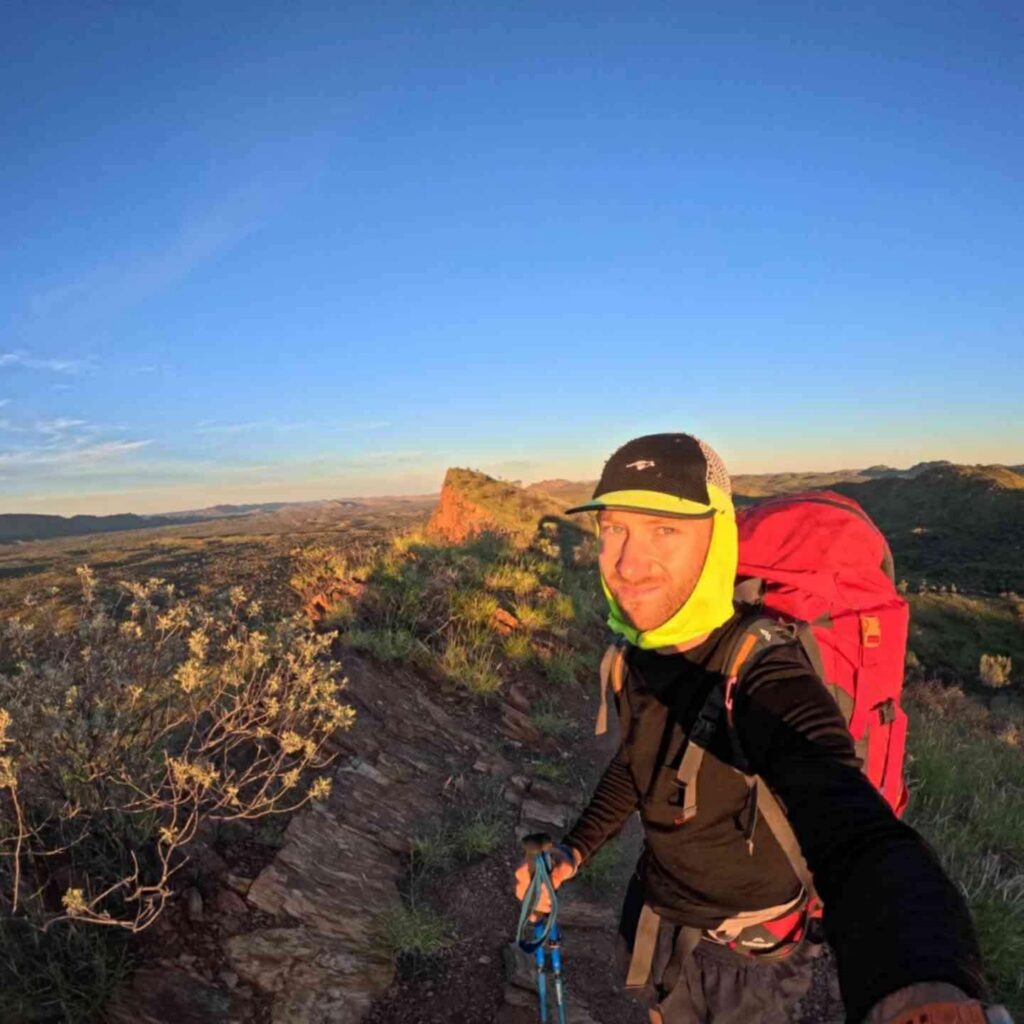
The vastness of the desert has a way of changing our perspective.
“The red dirt is something special,” Verrier says. “It made me feel very small out there.”
For someone recovering from a brain injury and the relentless mental noise that can accompany it, that sense of scale and the silence that came with it became something powerful.
“Dealing with a traumatic brain injury for a couple of years, I had a very busy mind,” he says. “Moving to Central Australia and immersing myself on country through trail running was a gift.”
Running the Larapinta Country
At first he spent time hiking the trails of the region, gradually building up to running sections of the Larapinta Trail. The rhythm of movement through the ranges became something more than exercise.
“I used trail running and hiking as a moving meditation to quiet the mind,” he says. “When your mind is quiet for long enough, your heart begins to open more,”
Distractions faded and the sound of breath, wind moving through the desert and boots brushing across loose gravel became the only things that mattered.
“I found purpose again through connection to nature and running.”
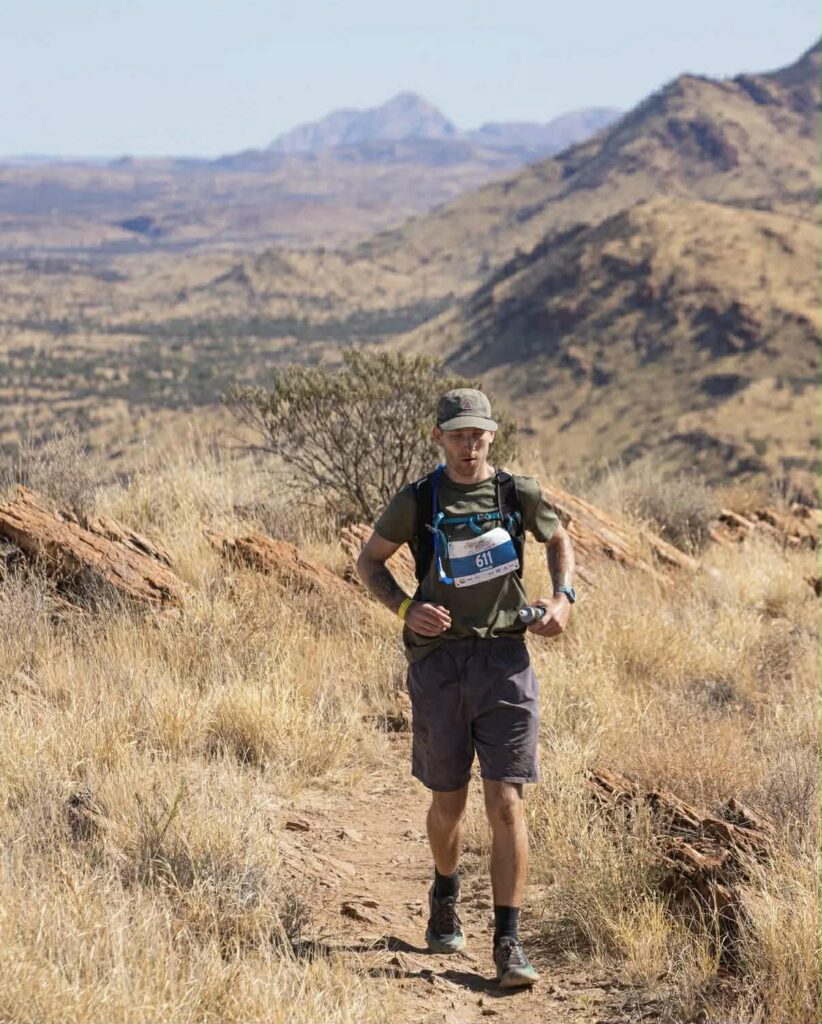
That connection grew deeper over time.
Learning about the cultural significance of the country to the Arrernte people added another layer of meaning to his time in the ranges. The landscape was no longer just a backdrop for running but something to move through with respect and awareness.
“You don’t have to run,” he says. “Just being out there following your breath and listening to the sounds is enough.”
The West Macs Monster Moment
Two years after first discovering trail running, Verrier lined up at the West Macs Monster trail race.
He arrived with modest expectations after an earlier attempt. With everything he’d been through, simply being able to run again felt like enough.
What happened next surprised even him.
“I never had any expectations to perform well in ultra distances,” he says. “But winning the race and breaking the course record was something never in my mind.”
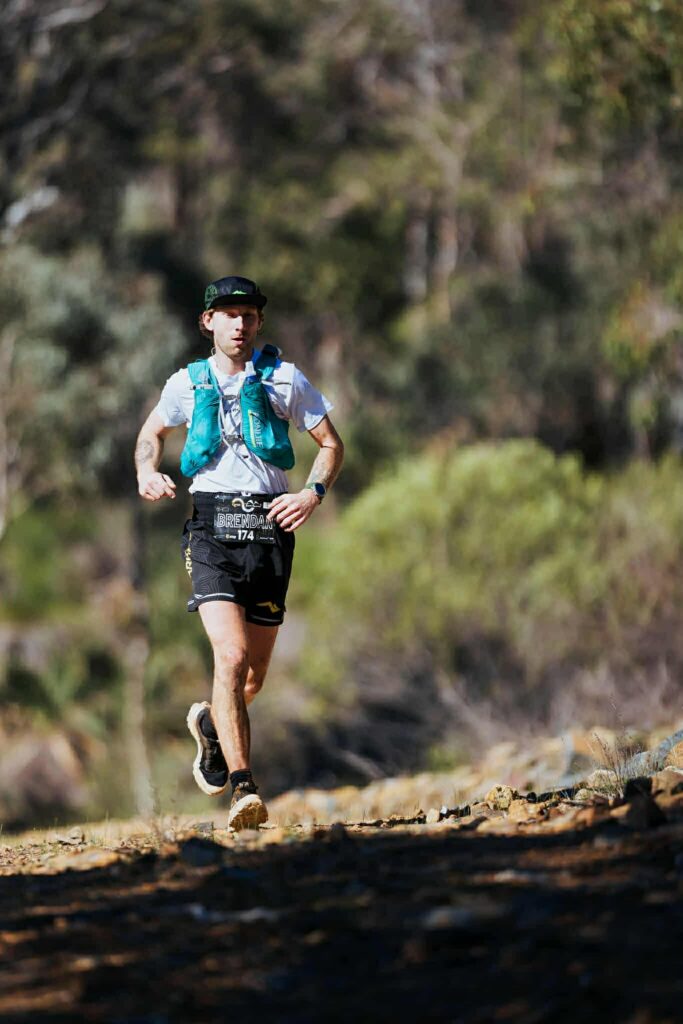
Standing at the finish line, he struggled to process the moment.
“It was a state of disbelief,” he says. “All I wanted to do was be out in nature and experience life to the fullest.”
Carrying the Desert Forward
Today, even after leaving Alice Springs and returning to Western Australia, the lessons of those desert trails continue to shape how Verrier runs and how he lives.
Back in Perth, the noise of traffic and the rush of city life felt jarring after the stillness of Central Australia. Running beside busy freeways was a far cry from the quiet of the MacDonnell Ranges.
But the search for silence remains.
“Silence is very important for my headspace,” he says. “If I can’t get on a trail, I’ll use seated meditation to recharge.”
Whenever possible, he escapes into the Perth hills, where trails wind through jarrah forest and the call of red-tailed black cockatoos echoes through the trees.
And wherever he runs now, whether it’s in Western Australia, interstate, or further afield, something of the desert travels with him.
“With that deep connection to the land, I take those experiences into every trail run around Australia,” he says.
Because sometimes the biggest change doesn’t come from a finish line or a podium.
Sometimes it comes from the places that quietly reshape you along the way.
Head back to the Trail Run Mag website for more trail running stories, gear reviews and race coverage. We’re adding new articles regularly.