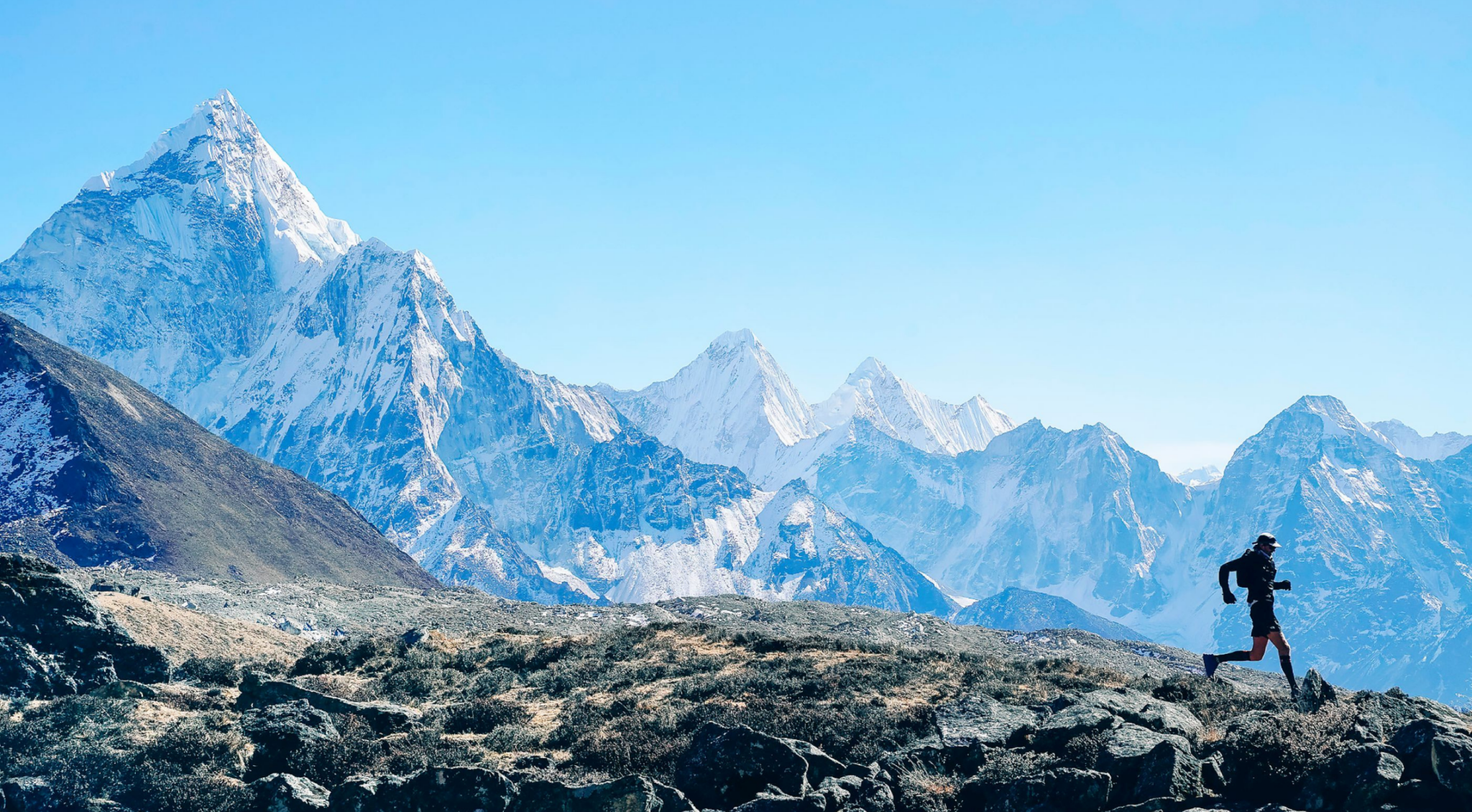
Skyrunning is trail running’s wilder cousin. It’s a sport where ridgelines replace roads, vert replaces distance, and courage counts as much as endurance. With the launch of DIVERGE Skyruns in Australia, the community is ready to climb higher. Kate Dzienis spoke with Tassie mountain specialist Dave Bailey, Sydney seasoned racer Dave Byrne, and Chamonix-based Australian Milly Young about the grit, the risk, and the growing allure of running in the sky.
The air thins, the ground falls away, and every step demands your full attention.
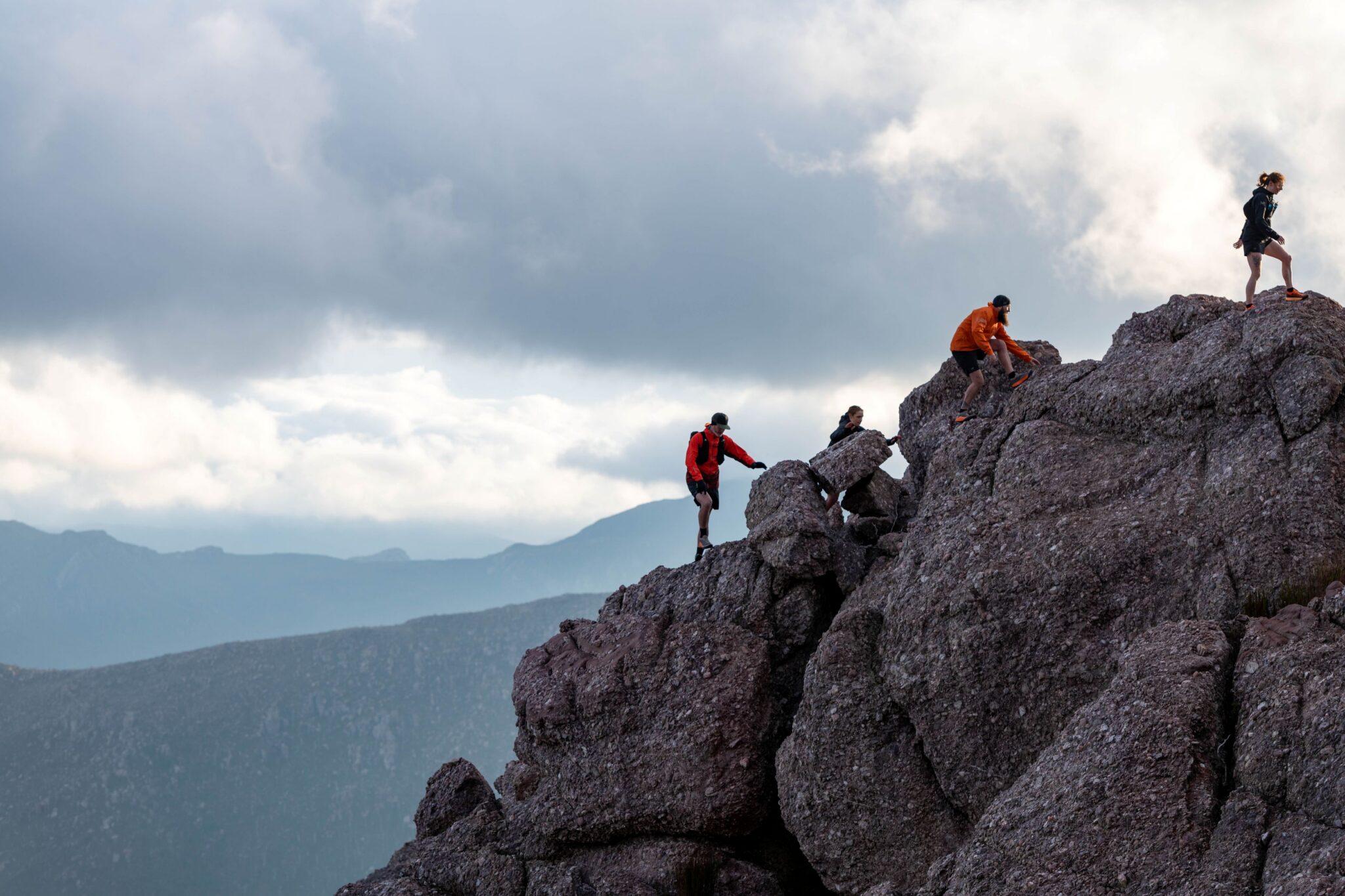
A jagged ridgeline stretches into the clouds, the wind howls across exposed rocks, and all that exists in the moment is the rhythm of breath and the scramble of hands and feet.
This isn’t road running. This isn’t even your typical trail hit.
This is skyrunning.
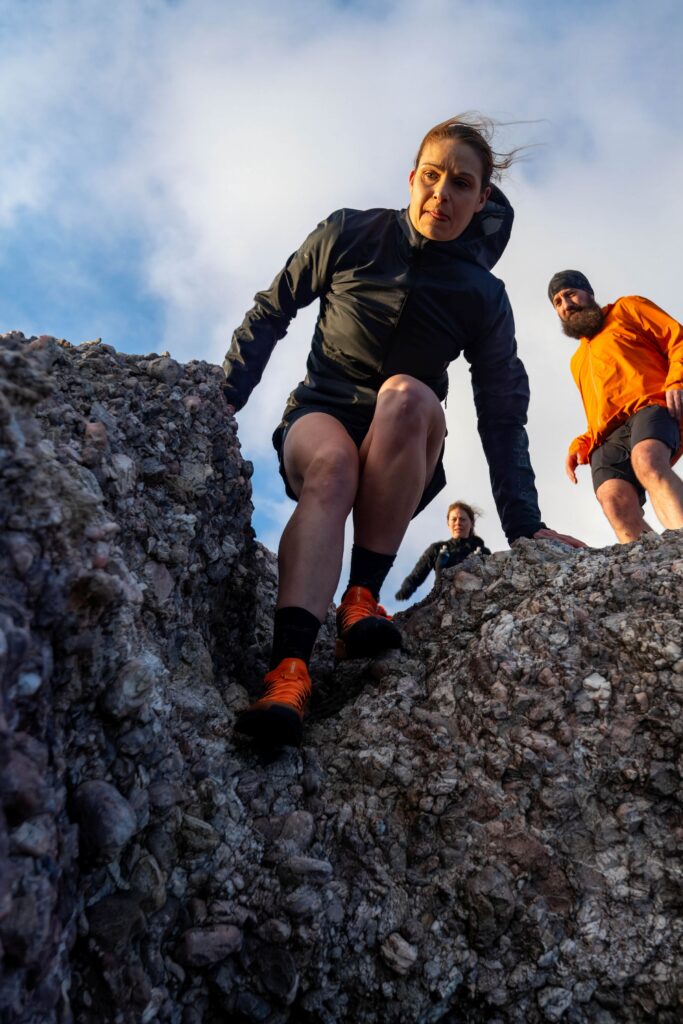
A sport that asks runners to meet the mountains on their own terms, where vert replaces distance, and courage counts as much as endurance.
An idea born in the European Alps in the 1990s, skyrunning was pioneered by Italian mountaineer Marino Giacometti, who believed that running shouldn’t stop where the road ended. He and his team defined a sport that reached beyond the trails, up into the sky – to races where altitudes exceeded 2,000m, gradients spiked above 30%, and the terrain itself became the ultimate test.
Soon, iconic races like the Dolomites Skyrace and Zegama-Aizkorri drew global attention, with athletes like Kilian Jornet showing just how fast humans could move across impossible mountains.

Across Europe, the sport has flourished, with the International Skyrunning Federation (ISF) founded in 2008 to set rules, regulations, and promote the sport. But in Australia, skyrunning has only recently begun to find its footing. Until now, most local events have focused on trails with moderate vert, accessible courses, and distances that prize endurance over elevation. That changes with the arrival of DIVERGE Skyruns, which has placed Australia on the global skyrunning map.
To understand why the sport matters, and why its popularity is soaring, we spoke with three athletes who bring different perspectives: Tasmanian mountain specialist Dave Bailey and Sydney’s seasoned racer Dave Byrne. Their voices illustrate not only what it takes to be a skyrunner, but also why the culture around it is set to redefine trail running in Australia.
Epic. Gnarly. Fun.
For 34yo Tasmanian runner Dave Bailey, mountains have always been the heart of his running life. With 16 years on the trails, he first encountered skyrunning through the Triple Top Mountain Run, a brutal course that’s been recognised by the ISF.
“We are blessed in Tasmania to have so many stunning mountains and trails to run,” he explains.
“The terrain can be harsh and brutal but beautiful, so it is well suited to technical trail running.”
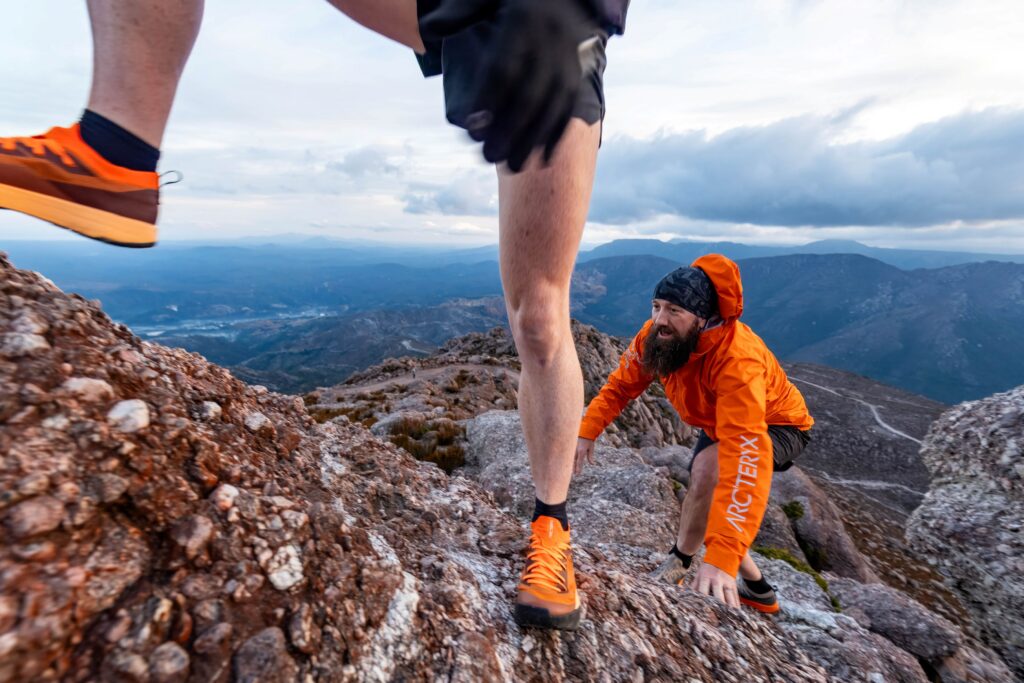
Last year, Dave achieved a career milestone, making the Australian team for the World Skyrunning Championships in Spain. Yet that achievement was shadowed by personal grief with the sudden death of his father just weeks earlier.
Racing on the world stage became both a tribute and a test.
“I knew I had to do it for him, no matter how hard it was so soon after his passing,” he says.
“I had so many difficult moments during the races but thoughts of him are what got me through.”
For Dave, skyrunning isn’t just about technicality, it’s about mindset. He describes it in three words: Epic, gnarly, fun.
But the fun isn’t casual. It comes from being hyper-focused on every foot placement, every descent, every line.
“The feeling of being hyper focused on picking the best line, while keeping the body nice and relaxed as the trees and rocks rush by in your peripheral vision is like nothing else,” he reveals.
He knows the risks too. Slippery scree and exposed ridges demand humility, yet Dave also stresses accessibility: if you don’t have mountains, you can still train.
“Even one technical trail close by, if you run it frequently and at pace, will prepare you better than you think,” he advises.
“And visualisation is powerful. Know the course, imagine the challenges, and plan how you’ll face them.”
Where Risk Meets Reward
Sydney’s Dave Byrne, 44, brings a different lens: a runner who once thrived on the track and road, representing Australia in cross country before gravitating toward mountains.
His introduction to skyrunning came at the inaugural Buffalo Stampede in Bright, Victoria, and he frames skyrunning as trail running pushed to its absolute extremes.
“That first ‘proper’ mountain race was an eyeopener,” Dave recalls.
“The technical terrain, super steep inclines and descents, as well as the chilly summits made for an incredible day out.

“Winning helped too. From there I was hooked.
“At one end you’ve got easy flat trails. In the middle, you’ve got events like Ultra-Trail Australia. And then at the opposite end you’ve got skyrunning. Lots of steep climbing, gnarly descents, scree slopes, sometimes even via ferrata, and altitudes beyond 3,000m.”
On high ridgelines, Dave says the sport demands presence like nothing else.
“I have to concentrate intensely on what I’m doing, because a mistake can lead to serious injury,” he explains.
“This makes for a liberating experience as I find clarity and all the clutter of daily life disappears.”
Dave’s career has taken him to the Skyrunning World Championships in Chamonix, France where he watched the European elites dismantle terrain he thought he understood. Seeing Kilian Jornet descend technical ridges ‘as if it were an open road’ was a humbling lesson
For Dave, skyrunning provides a deeper sense of achievement because every climb conquered and descent survived feels like a victory in itself.
“Every summit, every descent survived, gives you a rush,” he says.
“Skyrunning provides a sense of achievement beyond what I get from most other races.”
Where Climbers Become Runners
Skyrunning, for 34yo Milly Young, is the perfect meeting point between her love of climbing and her discovery of trail running. Originally from Kojonup in Western Australia but now based in Chamonix, France she first laced up during Covid lockdowns.
“I came to running from climbing, so the more technical nature of skyrunning appealed to me,” she says.
“What makes skyrunning alluring is the blend of mountain movement and running. You get to play on exposed ridge lines at altitude, skid down scree slopes and use your hands as well as your feet to ascend steep, technical terrain.”
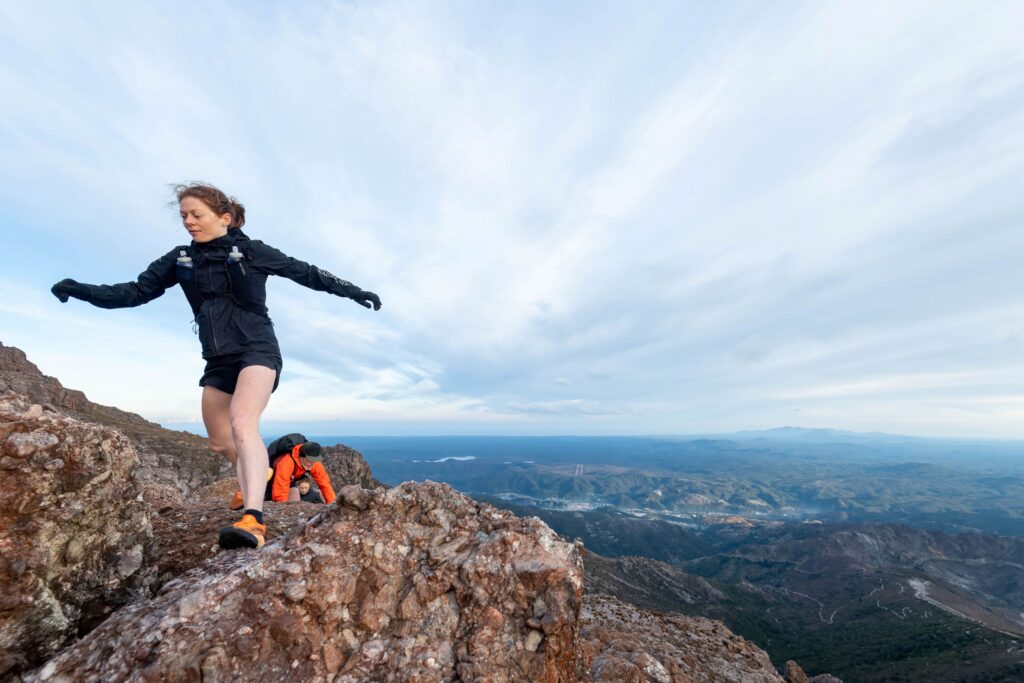
Milly reveals that what she treasures most is the quiet that comes with exposure.
“My mind is mostly completely empty,” she explains.
“On technical ridgelines and steep exposed ascents, you usually need to have complete focus on where you’re placing your hands and feet. In these moments the mind goes quiet. That’s one of the things I love about skyrunning. It’s a moving meditation.”
When mountains aren’t accessible, Milly turns to steep treadmills and braving bad weather to mimic the demands of the sky. Above all, though, the sport gives her joy.
“I just love moving quickly through the mountains on technical terrain, and skyrunning is exactly that, but in an organised setting,” she says.
Why Skyrunning is Booming
So why is skyrunning growing now? Partly, it’s a natural evolution of trail running. As ultras became more mainstream, athletes began looking for the next challenge.
Elevation, exposure, and technicality became the new currency of adventure.
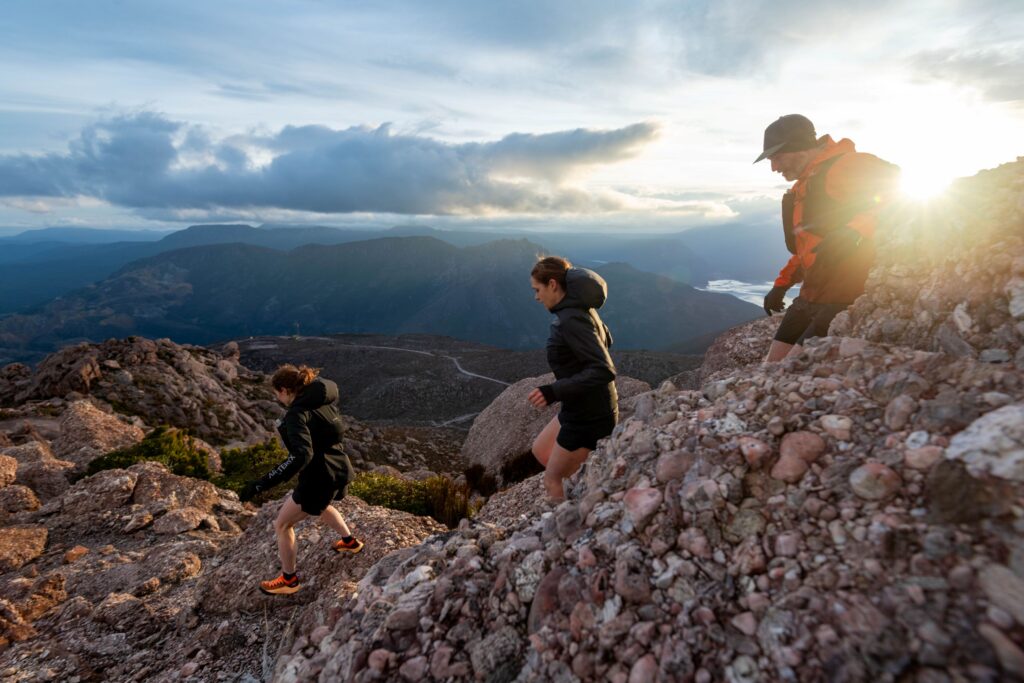
Social media has also played a role. A summit selfie at sunrise on a razorback ridge sells the spirit of the sport more viscerally than a road marathon medal, and skyrunning just seems to tap into the human desire not just to run, but to explore, to risk, and to stand somewhere most people would never dare to go.
It’s also about connection to landscape. In Australia, where deserts, rainforests, and coasts dominate, skyrunning highlights a different beauty: the harshness of the climb, the bite of alpine winds, the stillness of high plateaus.
For runners, that connection is often life-changing.
What Skyrunning Teaches You
Dave Bailey calls it epic, gnarly, fun. Dave Byrne calls it challenging, inspiring, educational.
Together, their words frame skyrunning as more than a niche pursuit. It’s a culture of courage, where community is forged in shared suffering, and where each finish line is just another starting point.
With Australia stepping onto the global stage through events like DIVERGE, the future of skyrunning here is wide open. Whether you’re chasing podiums, seeking clarity on a ridgeline, or carrying a message higher than the mountain itself, skyrunning offers a simple promise: at the edge of fear lies freedom.
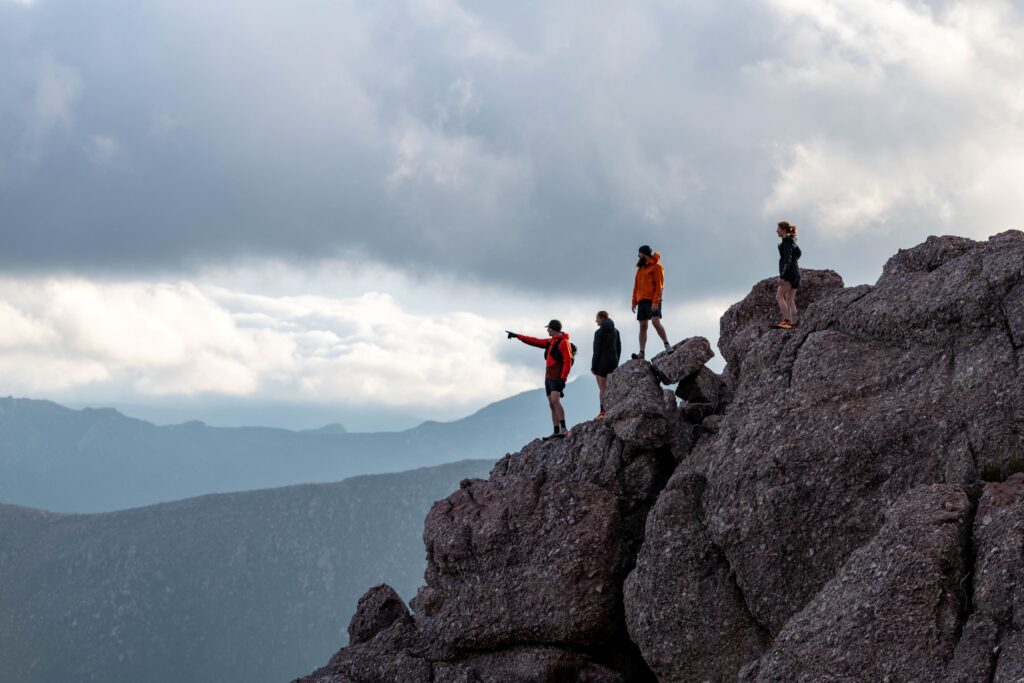
And perhaps that’s why the sport is booming.
In a world that often feels flat, skyrunning dares us to look up.
If you’re keen to get into Skyrunning, check out Diverge Skyruns
Web: diverge-skyruns.au
Kate Dzienis is your Trail Run Magazine editor and thrives on singletrack, strong coffee, and stories that go the distance. When she’s not wrangling words, she’s dreaming up new trail adventures – sometimes mid-run, sometimes mid-sentence. Fuelled by endurance and espresso, she’s here to keep your trail stoke high and your reading pace steady.
If you liked this feature story, subscribe and never miss an issue.