The Hidden Heroes of Trail Running: Aid Station Volunteers
Aid station volunteers are the hidden heroes of trail running. Meet the people behind the scenes who keep runners fuelled, motivated and moving forward.
Staying connected to one another is part of our human psyche. As trail runners, we know how social this sport can be – we make friends, find pacers, share goals and push each other to achieve them. But there’s another side to trail running: the volunteer side. It’s where runners give back to the community and gain a new perspective on what it takes to make an event run smoothly.
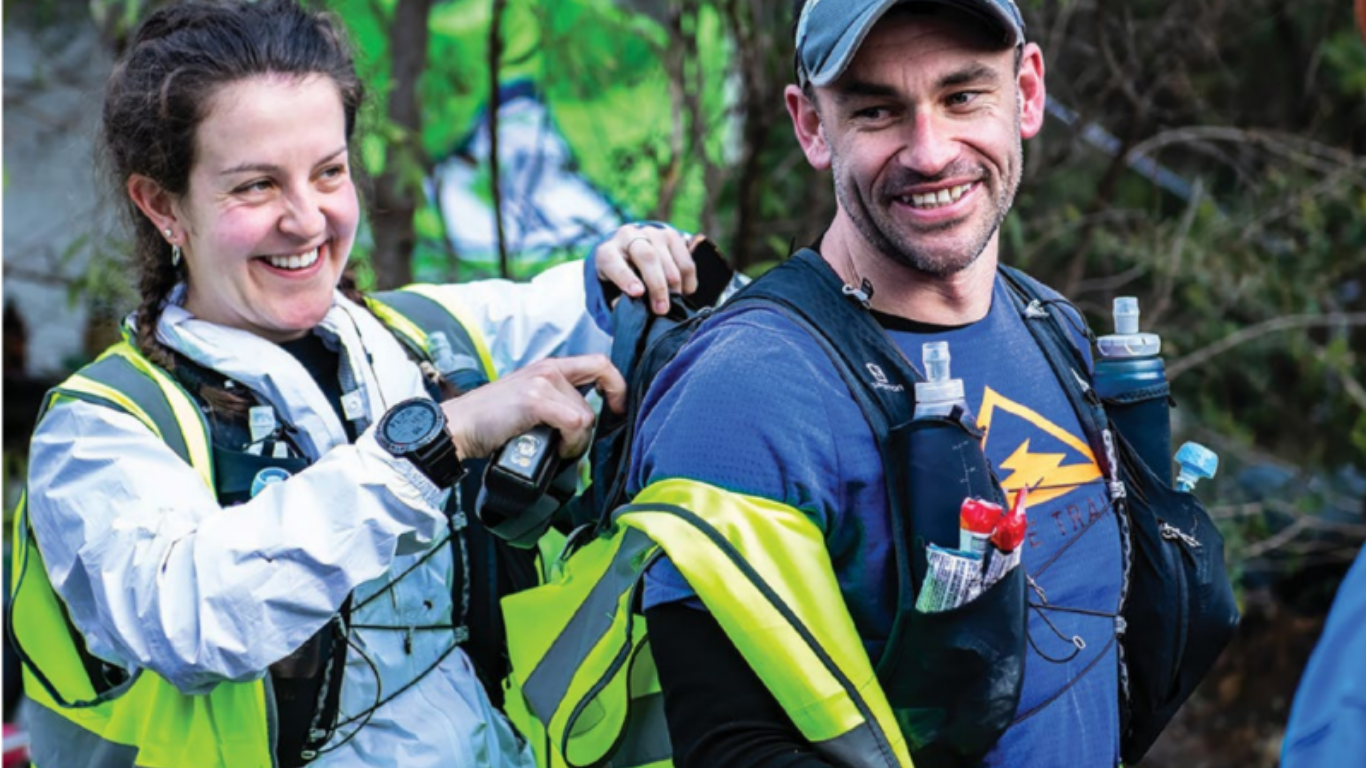
Aid stations are the heart and soul of trail races. A high five, a pep talk or a hot cup of soup can be enough to keep a runner moving forward. Volunteers play a pivotal role, and there are many reasons people step up—injury, taking a break from racing, supporting friends, or simply wanting to give back.
I spoke with two Victorian volunteers, Alison Moxham and Warren Maynard, about their love of aid station volunteering and what it takes to make race day work.
More Than Just a Drink Stop
Without aid stations and the people who run them, we’d be a mass of hot, bothered runners wandering the bush in search of food and somewhere to sit down.
If you haven’t taken a back seat from racing to volunteer at an aid station, you’re missing out.
Because there are aid stations—and then there are aid stations.
Many runners have done road races where drink stops are exactly that: volunteers lined up on the roadside holding out cups of water or electrolytes as runners grab and go. Trail running is different.
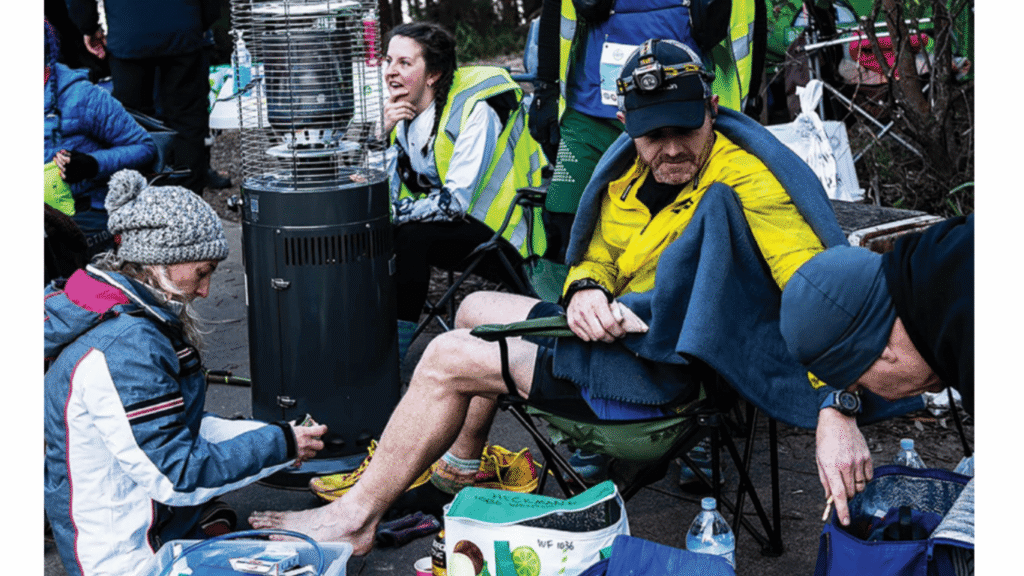
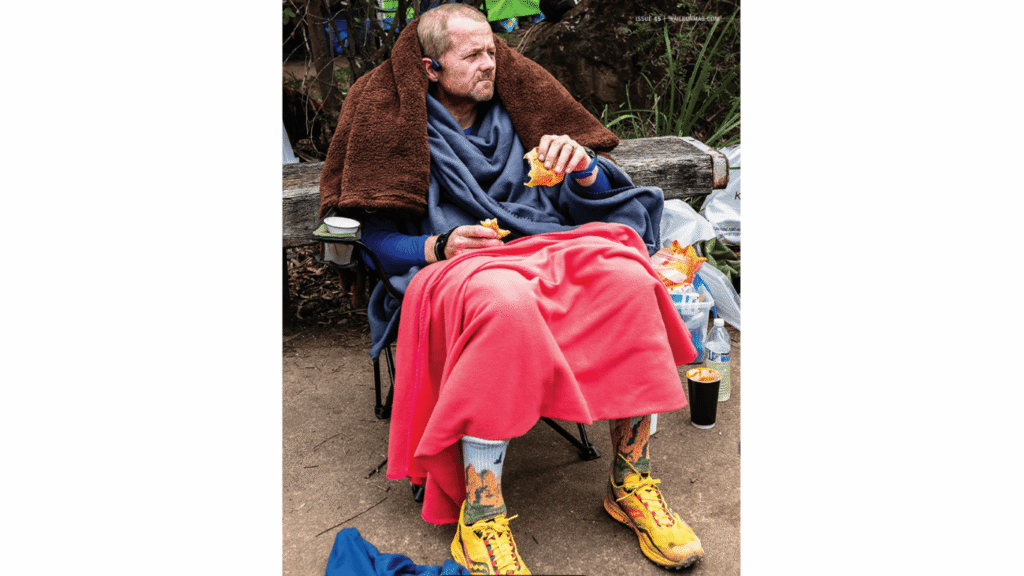
As distances increase, aid stations become places in the middle of nowhere where runners can regroup, refuel and reset. Some go all out—hot soups, pizzas and stews, vegetarian spring rolls and zucchini slices, hot potatoes with butter or gravy. Add camping chairs, makeshift beds, first aid supplies, chafe cream and motivational pep talks, and it’s easy to see why trail aid stations have legendary status.
Life at the Remote Aid Stations
Forty-seven-year-old Alison Moxham from the Dandenongs has been trail running for over a decade and has lost count of how many aid stations she’s worked. Her favourites are the remote ones. Places like Mount Speculation, a four-hour drive from home and accessible only by 4WD.
Together with friends, Alison would set up a camper trailer, provide official first aid and run the aid station as a team.
“The remote aid stations are a lot of fun because you get to see so many beautiful parts of Victoria with people you know, and you’re out there roughing it,” she says.
“We always had a campfire going, plenty of drinks, toasties, hot cross buns and donuts. The remote ones are the most fun because you’re out in the middle of nowhere with a group of amazing people.”
Some aid stations became yearly traditions.
“Runners knew who would be there and looked forward to hanging out with us. We’d have music going and tried to offer more than just lollies and cola.”
Being runners themselves helps volunteers understand what people need.
“Many runners are hesitant to ask for something, especially on longer races, so you need to know how to ask what they want without sounding pushy.”
Sometimes small things make the biggest difference.
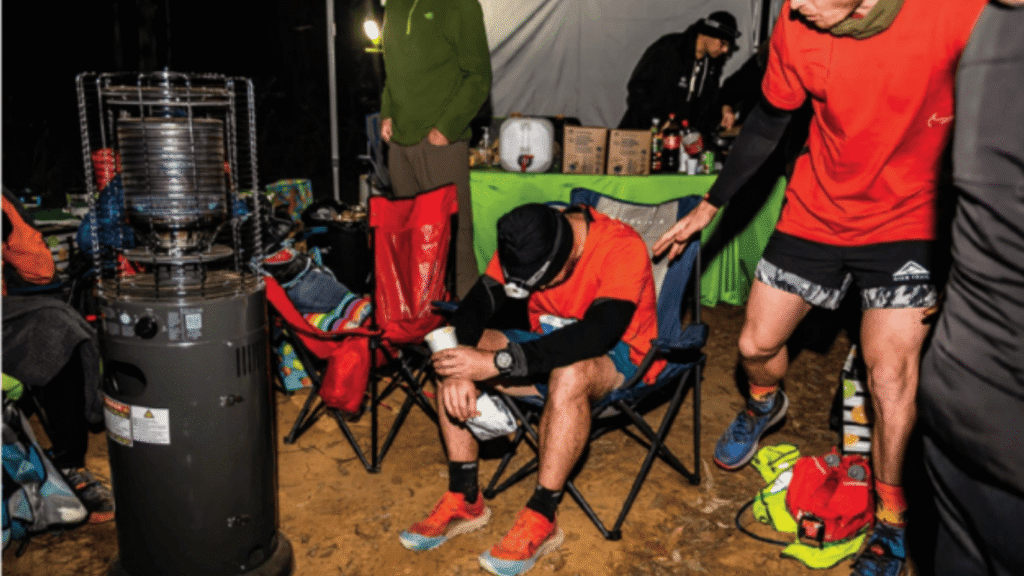
“Sometimes all they need is a bit of sugar, something hot in their belly, a couple of minutes’ rest, a massage or a foot rub and suddenly they’ve done a complete 180 and head back out in great condition.”
Not every runner arrives in good spirits.
“I’ve had people come in and state very matter-of-factly that they’re done, so I get real with them. Of course you’re tired—you’ve run 80km and you’re going to run 100km. This is how you’re supposed to feel. It’s not easy.”
“It’s a bit of reverse psychology and a bit of tough love.”
Reading the Runner
Warren Maynard from Melton has been trail running since 2005 and has completed numerous marathons and ultras. His running club has volunteered extensively at aid stations, particularly at Down Under 135, where he heads Nolan’s aid station at the base of Mt Wilson.
Warren believes good volunteers know when to help and when to step back.
“It’s important at times to stand back and observe. You need to read a runner and what they want. You can see on their face if they want help or if they have themselves sorted,” he says.
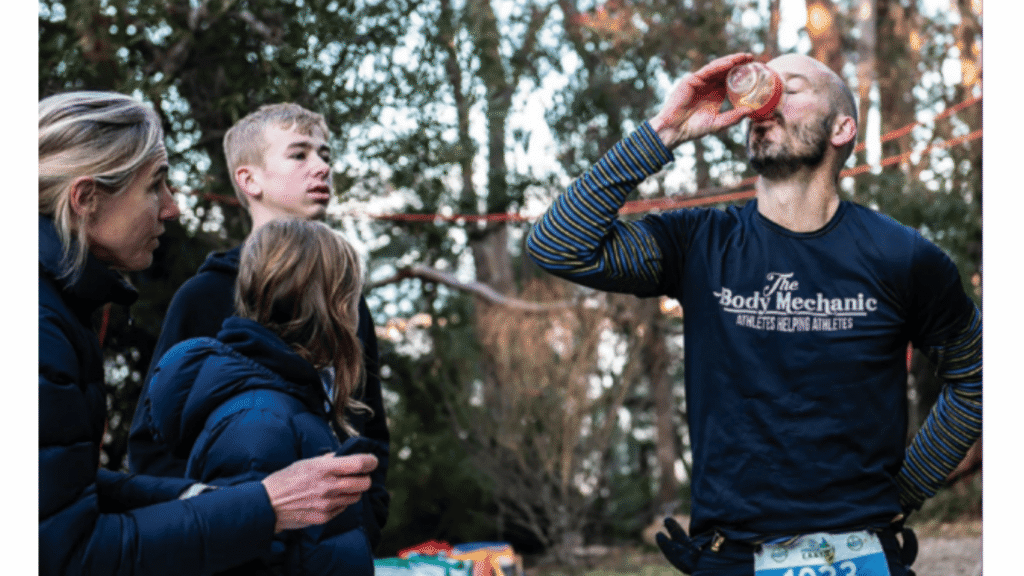
“Runners doing these sorts of events are emotional—they’re sore, tired and hungry. There’s a fine line between being pushy and not being pushy enough.”
Different runners use aid stations in different ways.
“The really fast runners come through super quick, whizzing past and thanking us for volunteering,” he says.
“Others love spending time at aid stations, having a chat and resting their feet.”
Most aid stations provide the essentials like water, electrolytes and race-supplied food, but many go further.
“Sometimes we provide hot food like lasagne,” Warren says.
“There are different levels of aid stations at any race, big or small, short or long with music playing, fairy lights and a wide variety of food.”
The Heart of Trail Running
Speaking with Alison and Warren makes one thing clear: aid station volunteers are passionate about making sure runners are happy, healthy and safe.
They’re not just doing it because they have to.
In many ways, they become the mums and dads of our races—offering tough love when needed while treating every runner like the most important person on the course.
With so many trail events across Australia and New Zealand, volunteering has never been more important. If you haven’t tried it, it’s incredibly worthwhile. You’ll see races from a completely different perspective and may even find yourself knowing exactly what runners need when they arrive.
From themed costumes and playful antics to fully catered meals and a shoulder to lean on, trail runners are incredibly lucky to have volunteers willing to give their time and become part of the race-day family.
This article is from Issue 45, 2022 and is available as a back issue here.