When “Flexible Cancellation” Isn’t So Flexible
A cancelled race trip revealed just how unclear some short-term accommodation cancellation policies can be.
Last year I booked accommodation for an interstate gravel race months in advance.
Like most people travelling to popular events, I’ve learned the hard way that waiting until the very last minute is a terrible idea, especially in smaller regional towns hosting major races. By the time race week rolls around, accommodation options are usually slim pickings or eye-wateringly expensive.
That’s why I’ve always leaned heavily on homestays and short-term rental platforms when travelling for events. They’re easy, there’s usually more choice than hotels and most of the time they do exactly what you need them to do.
At least they do when everything goes according to plan.
The real test comes when life gets in the way and you suddenly need to change your booking, or worse, cancel it altogether. As I found out recently when I actually had to do exactly that.
When Plans Go South
I assumed that if I ever needed to cancel a booking, the cancellation policy would simply work the way it said it would.
And I’m one of those nauseating people who actually reads the fine print before booking anything, so needless to say, I’d read the cancellation details before booking. Call me old fashioned, but if a platform says you can cancel before a certain date and receive a partial refund, I tend to believe it.
That assumption held up right until I actually had to cancel the accommodation I’d booked.
About six weeks before the trip, a family situation came up unexpectedly and I could no longer go. I cancelled well before the partial refund cut-off date and fully expected I’d lose part of the deposit. Because that’s what the policy said would happen.
Instead, I got nothing back.
Now to be clear, this isn’t a pile-on against short term accommodation platforms or the people hosting on them. Hosts need certainty too, especially around major events where accommodation gets snapped up months in advance. There absolutely needs to be cancellation policies and reasonable rules around when refunds apply.
I think it’s safe to say that most runners, riders and outdoor adventurers understand that.
The Refund Problem
The issue is about hosts and platforms upholding their own policies when things go wrong.
In my experience, the cancellation process ended up involving conditions and interpretations that weren’t obvious when I originally booked. For example, I was told the accommodation ‘might’ be refunded if it was rebooked, even though that condition wasn’t mentioned anywhere in the cancellation policy when I booked.
If conditions like that only emerge after cancellation, it’s probably worth questioning how clear the original policy really was.
After this experience I believe that hosts and platforms should be doing a better job of ensuring their policies are crystal clear before money changes hands. At the very least, we shouldn’t need to interpret wording when thousands of dollars in race travel can be involved.
Because phrases like:
- “partial refund”
- “50% refund”
- “flexible cancellation”
…don’t always mean what we think they mean.
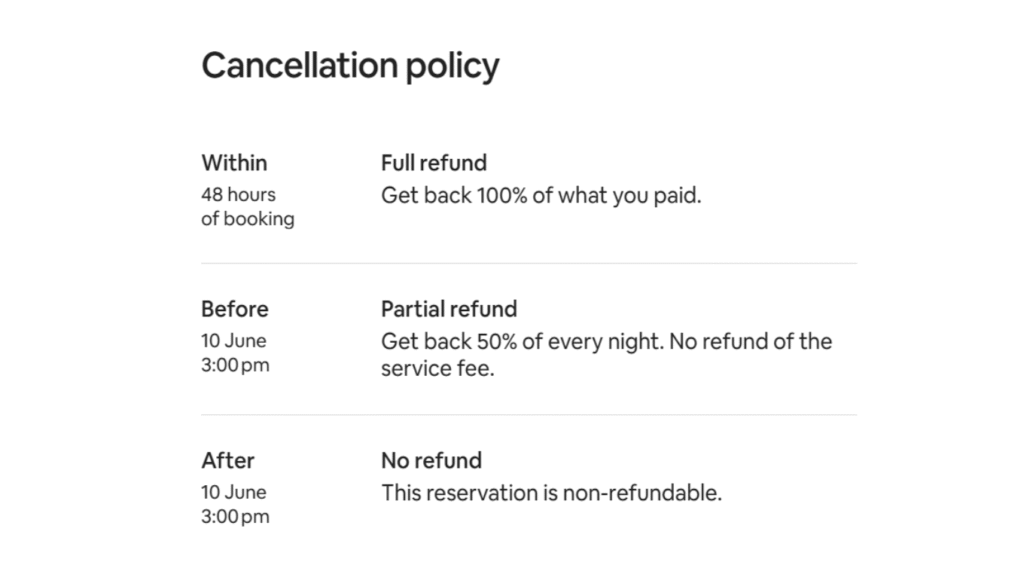
So before locking in accommodation for your next ultra, trail trip or gravel event, it’s probably worth asking a few important things first.
Things To Clarify Before Booking Race Accommodation
- Is the deposit refundable?
- If I’ve only partially paid, exactly what refund will I receive?
- What does “partial refund” actually mean in dollar terms?
- Can the host or platform confirm the refund outcome in writing?
- Are race-week bookings treated differently to standard bookings?
- Does the cancellation example shown on the platform match my exact payment scenario?
- Does the platform policy override the host policy in any circumstances?
It might feel slightly over the top at the time, but it’s probably preferable to getting stuck in an argy-bargy over vague policy wording after your trip has already collapsed in a heap.
Trail runners and adventure athletes already gamble enough with weather, injuries and race-day chaos. Accommodation policies probably shouldn’t feel like another risk factor.