For centuries, Dunhuang was one of the great crossroads of the ancient Silk Road. Travellers, merchants and pilgrims passed through this remote corner of northwest China on journeys between East and West, leaving behind a remarkable cultural legacy among the deserts and oases of what is now Gansu Province.
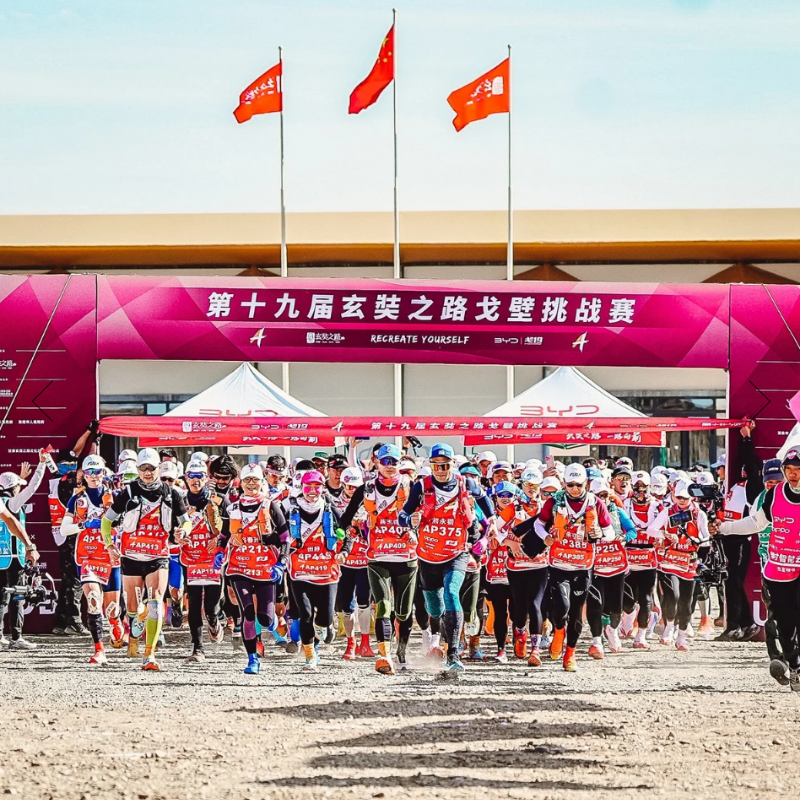
From September 27 to October 4 2026, runners will make their own journey through this landscape as Ultra Gobi returns for its 21st edition.
First held in 2006, Ultra Gobi has grown from its origins as an endurance challenge for business school students into a broader series of culturally rich events. Its location remains the Gobi Desert around Dunhuang and Guazhou, where this year’s program offers four formats ranging from a one-day 17km or 30km experience to a 121km non-stop ultra.
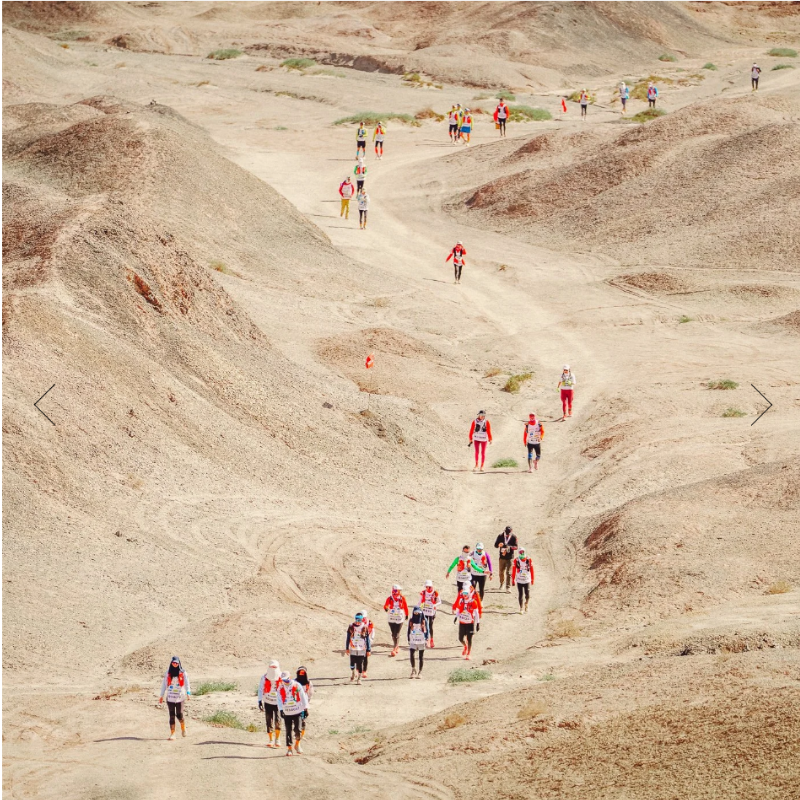
At the pointy end is A+, a 121km individual, non-stop race through the Gobi that is self-supported and navigated by GPS. Runners who choose this format have 30 hours to complete the course. They will be tested by extremes of temperature from morning to night where the mercury can fall below freezing.
For 2026, runners in the A+ format will also be heading into new territory.
A new route through an ancient landscape
This year’s A+ will follow an entirely new course inspired by the return journey of Xuanzang, the seventh-century Buddhist monk, scholar and traveller whose story is closely connected with Ultra Gobi.
Xuanzang left China in 629CE and spent 17 years travelling through Central Asia and India in search of Buddhist texts before returning to China. His account of the journey became an important record of the cultures and places along the Silk Road.
Ultra Gobi’s original event was created around this history, with the landscapes surrounding Dunhuang and Guazhou forming part of the vast desert region through which Xuanzang travelled.
The new A+ course follows the eastward direction of his return journey and the 2026 field will be the first to race the new route.
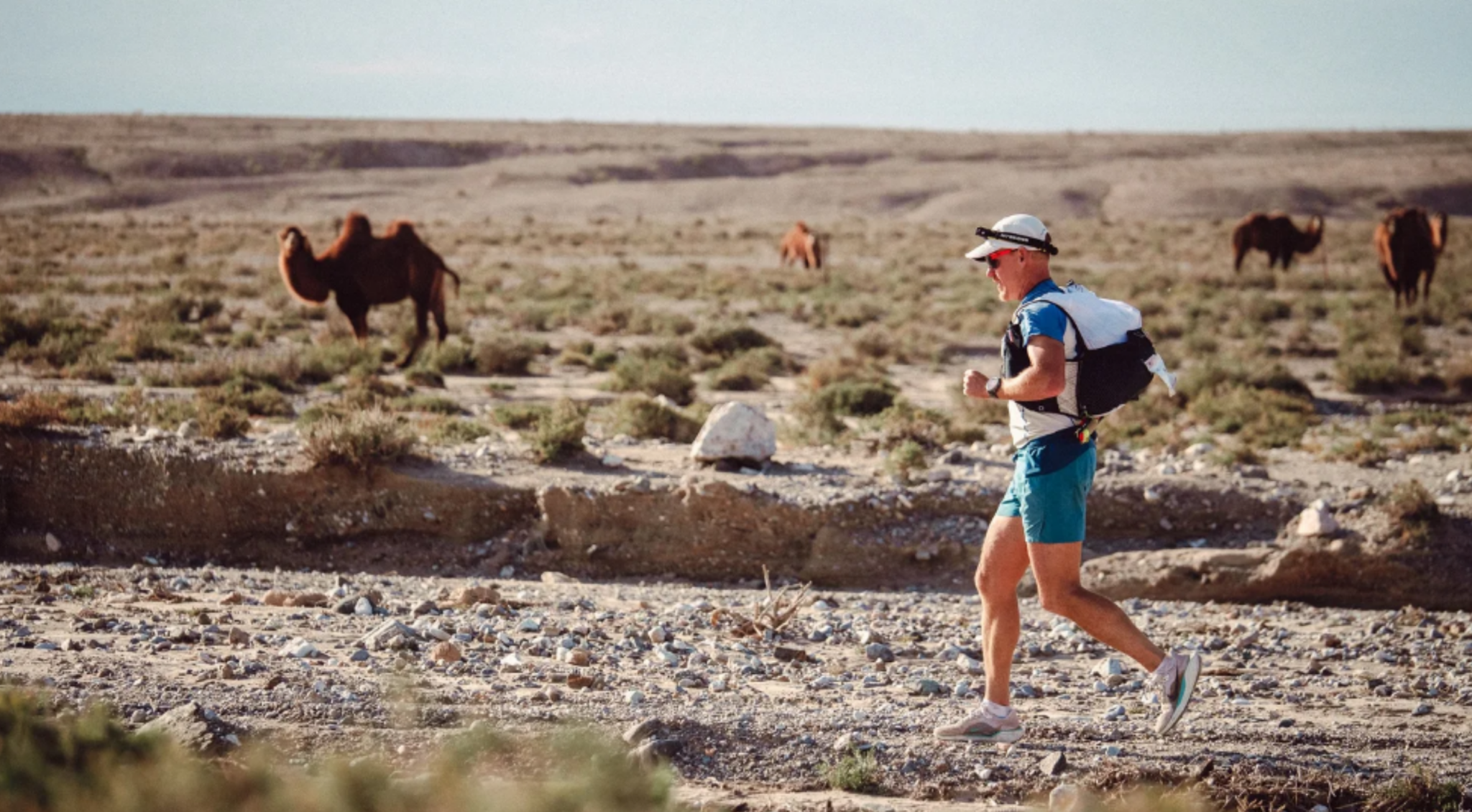
It adds another dimension to what is already a very demanding undertaking. The Gobi here is not simply an expanse of sand dunes. The courses cross desert plains, gravel, shifting sands and rugged terrain, with the region’s Silk Road history woven under every step.
Four ways to experience the Gobi
While A+ is Ultra Gobi’s most demanding individual format, the 2026 event offers three other race categories.
The A race covers 121km across four stages and four days, but competition is team-based. Teams of six to 10 runners take part, with the finishing time of the sixth member determining the team’s result. It is the format most closely connected to Ultra Gobi’s business-school origins and today includes university, business, corporate, brand and international categories.
B also covers 121km over four days, but is an individual stage race with a different emphasis. Its four stages range from approximately 25km to 35km, with a marked course and full camp support including meals, water, tents and medical assistance. Ultra Gobi describes the B format as placing greater emphasis on completion than competition, making it an option for runners wanting the multi-day Gobi experience without the self-supported and non-stop demands of A+.
At the other end of the spectrum, C is a one-day 17km or 30km experience on a marked course. Designed for participants able to comfortably walk the distance, it places a greater emphasis on experiencing the landscape and culture of the region.
Entry and registration requirements differ between the four formats, with some requiring registration through an affiliated business school or organisation. Prospective participants should check the requirements for their chosen event before entering. International runners are very welcome to register.
Beyond the race: Dunhuang and the Silk Road
There are easier places to run 121km. But few come with a backdrop quite like this.
A trip to Ultra Gobi puts runners in one of the most culturally rich corners of China, where enormous sand dunes, ancient ruins and some of the world’s most significant Buddhist art sit within a landscape shaped by more than 2,000 years of Silk Road history.
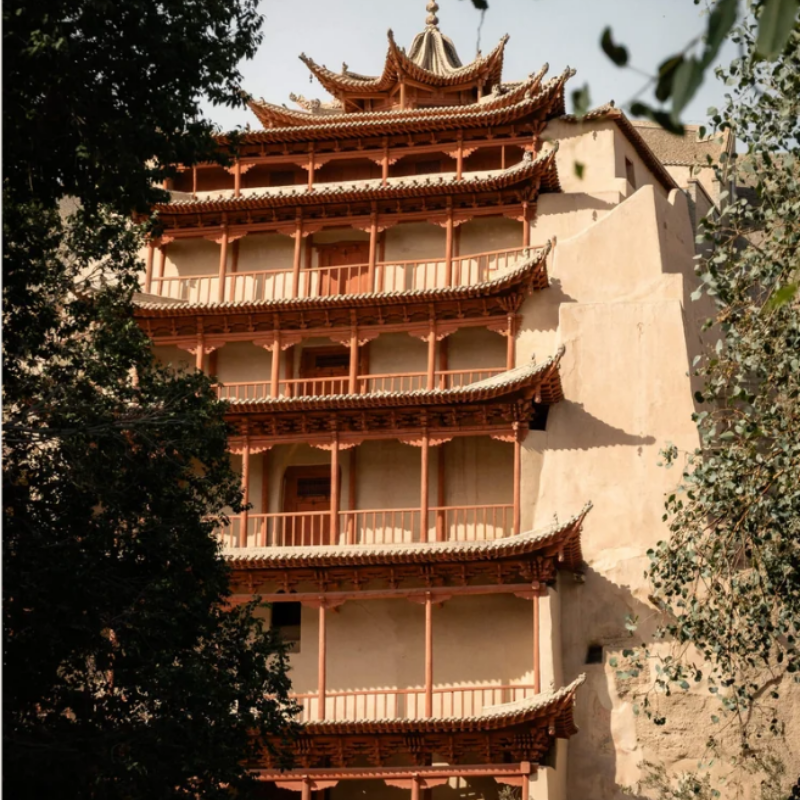
Near Dunhuang are the Mogao Caves, a UNESCO World Heritage site and one of the great cultural treasures of the Silk Road. Hundreds of surviving cave temples are filled with Buddhist murals and sculptures created over roughly a thousand years, giving a glimpse into the people, beliefs and cultures that once travelled these routes.
And then there’s the landscape itself. At the Singing Sand Dunes and Crescent Lake, towering dunes circle around a small crescent-shaped oasis – one of those places that looks improbable in photographs and gives some sense of the scale of the desert runners are about to tackle.
Further into the region, the ruins of Suoyang City and the ancient Xuanquan Posthouse tell another part of the Silk Road story. Once used by traders, officials and travellers crossing this formidable landscape, today they offer a tangible connection to the journeys that took place here centuries before anyone thought of crossing the Gobi with a race bib.
And after the desert, Dunhuang itself offers a night market that brings runners back to the colour and bustle of the present day, with local food, produce and handicrafts filling the streets after dark.
For international runners in particular, that’s a pretty compelling addition to the start line.
A desert of extremes
Late September and early October bring vast changes in temperature in the Gobi. Ultra Gobi advises runners to prepare for daytime temperatures around 20–30°C and overnight temperatures to around 0°C and potentially as low as -5°C.
B runners return to a supported camp after each stage. A+ competitors, meanwhile, continue through the night, carrying mandatory equipment and navigating the course by GPS as they work towards the 121km finish. So it is vital to check the details with the organisers for your chosen event.
Ultra Gobi – Gobi Desert, China
September 27–October 4, 2026
Dunhuang and Guazhou, Gansu Province, China
A+ – 121km, individual non-stop
A – 121km, four-day team stage race
B – 121km, four-day individual stage race
C – 17km or 30km, one day
Register now for this compelling and unique event. Race dates, entry requirements and further information are available from Ultra Gobi.