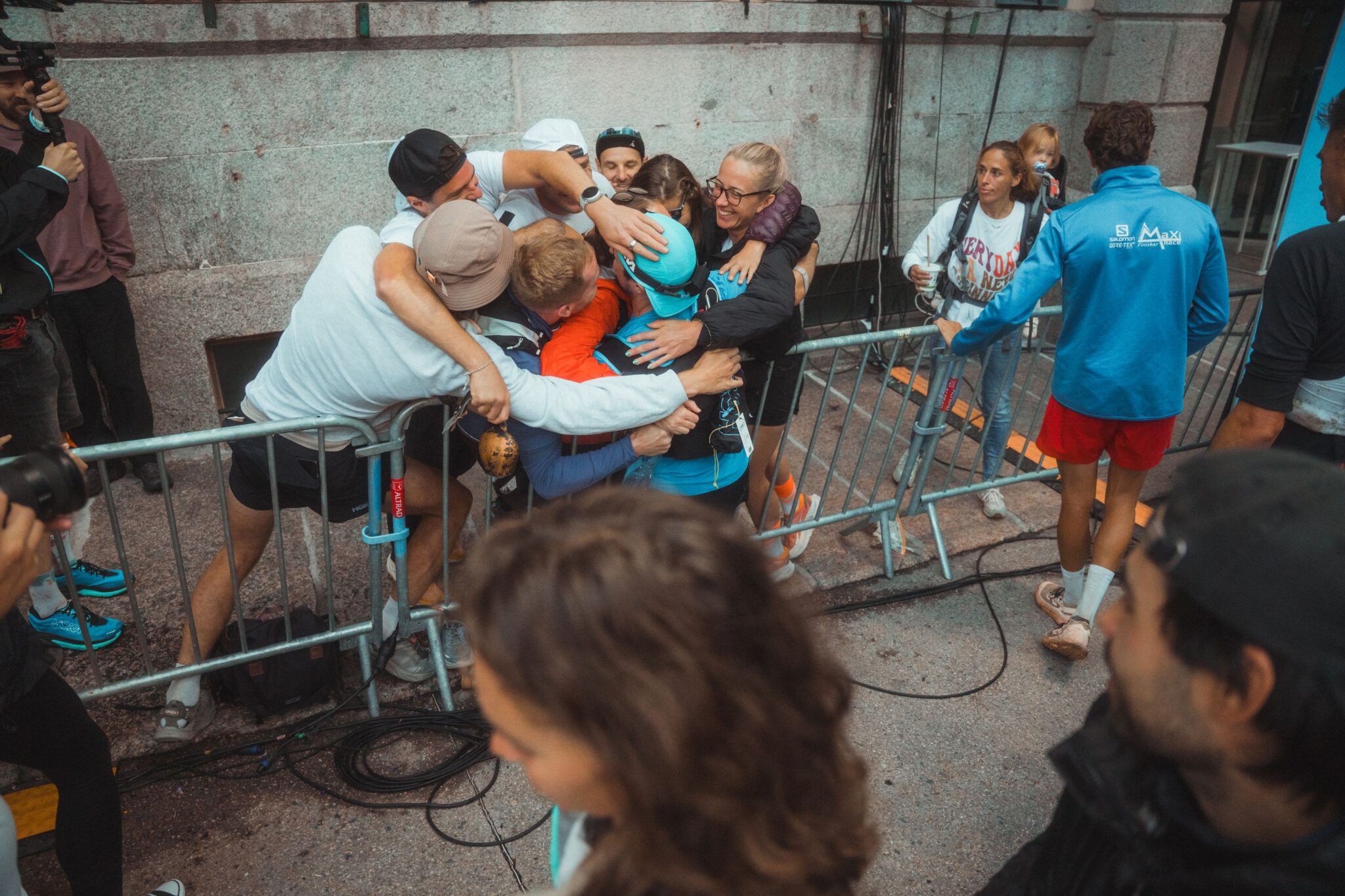
We often think of ultramarathons as solitary pursuits. Each runner makes their way in a long and lonely line across endless mountains until they cross the finishing line.
But behind that narrative lies another race entirely. It doesn’t appear on Strava, and it doesn’t earn UTMB stones. It plays out in aid stations, in car convoys and can be felt in the tightness of a stomach as a runner arrives 30 minutes later than expected.
This is the world of crewing: the hidden, often chaotic, and deeply emotional parallel race that unfolds beside every ultra.
And for Darren Agnew — a Manchester-based trail runner with a knack for quietly building community — the crew that follows him across the Alps each August isn’t there out of obligation. They’re there to pay back everything he has done so much for them and their running community.
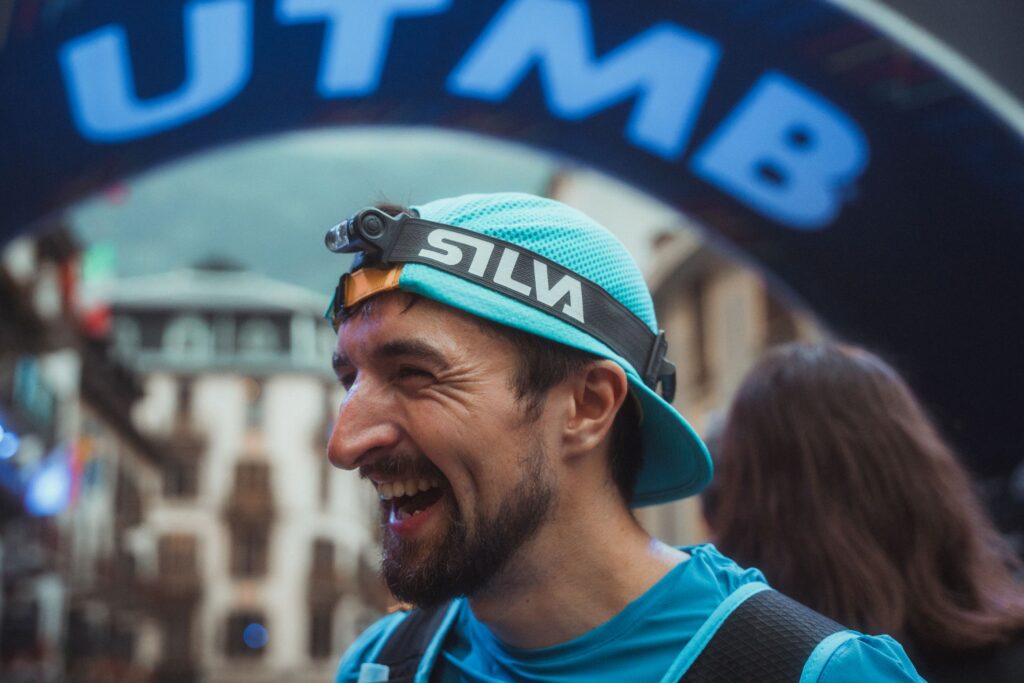
The Hidden Race is a new documentary from SportsShoes.com, in partnership with HOKA, which lifts the curtain on the unseen side of ultra-running. It follows Darren as he tackles the formidable 148km UTMB TDS, in Mont Blanc through the lens of his crew: the people supporting him as he makes the distance.
At the centre of this incredible story is Hannah Cawthra, Darren’s partner and chief crewer, who captures both the simplicity and enormity of the job when she says:
“Crewing is following your runner around the race… and really, whatever he needs in the aid station, I kind of just help him out with.”
It sounds procedural. It isn’t. It’s a second ultra layered over the first.
The making of a community
Ten years ago, Darren started running laps around Manchester’s city centre looking for green space and connection. From those early morning miles came a grassroots running community that welcomed newcomers, encouraged big dreams, and gently nudged people toward distances they would never have contemplated alone.
“I’ve been massively engaged by running as a way to push yourself,” he says, “but also a way of finding community… people in outdoor sports are generally more open and really, really encouraging.”
One by one, people showed up. They stayed. They ran. They became the kind of friends who now travel across the world to crew him through a 30-plus-hour mountain race.
As one crewer puts it:
“I don’t think I would have done half of the crazy races I’ve done if it weren’t for Darren bringing us all together.”
And so, when TDS rolls around, they don’t just wish him luck.
They pack bags.
Book flights.
Pull on waterproofs.
And throw themselves into the nerve-wracking responsibility of getting their friend through the mountains well inside cut-off.
Learning the rhythm of crewing
Before 2023, Darren wasn’t much interested in having a crew.
He preferred the simplicity of running aid station to aid station alone, dealing with lows quietly, fuelling himself, slipping in and out with minimal fuss. But when Hannah suggested she get a supporter’s bus pass for UTMB that year, something shifted.
“I don’t know if it was reluctantly,” she laughs, “but maybe reluctantly, and maybe I forced him a little bit, but he said yes.”
That simple yes opened the door to a new kind of racing for both of them, one built on trust, shared experience, and the steady reassurance that someone will be there, even when you’re deep into the night and wondering what on earth you signed up for.
For Darren, it’s not the soft flasks or the spare socks that matter.
“There’s a magnetism to going from aid station to aid station knowing that there’s going to be people there… it reinforces positivity as you’re going around the race.”
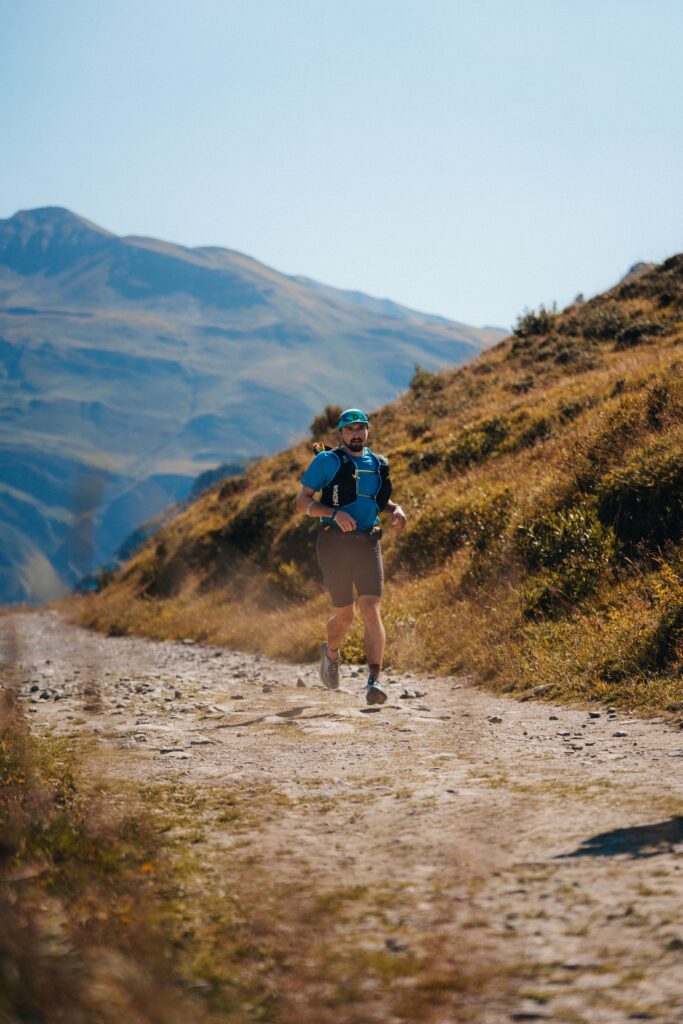
For Hannah, it’s a different kind of pressure: a knot of responsibility that never fully loosens.
“If I don’t get to that aid station and he’s given me something he really needs,” she admits, “I don’t think I’d forgive myself.”
The anxiety you don’t see
From the outside, crewing can look like standing around waiting for someone to appear. But The Hidden Race shows the reality: relentless mental calculation, fear of missing buses, sprinting through villages, last-minute reshuffling of gear, and the background hum of “What if we’ve missed him?”
At one early aid station, the crew realise Darren may reach the checkpoint before they do. Their panic is quiet but unmistakable.
“You just don’t want to let yourself down,” Hannah says, her voice cracking. It’s not perfectionism — it’s care, woven tightly with responsibility. “You’re not just carrying snacks. You’re carrying the things they’re counting on.”
There’s a moment of levity later, when someone asks what’s harder: running the race or crewing it. Hannah doesn’t miss a beat:
“This is f***ing hard.”
And she’s right. An ultra tests the legs. Crewing tests everything else.
Aid station moments
The 90km checkpoint — rewriting last year’s low
Last year, the 90km aid station was a turning point of the wrong kind for Darren. He arrived shattered, nauseous, and needed nearly two hours to reset.
But this year, he comes in two hours ahead of last year’s schedule which is a testament to training, patience, and maybe the steady presence of his crew.
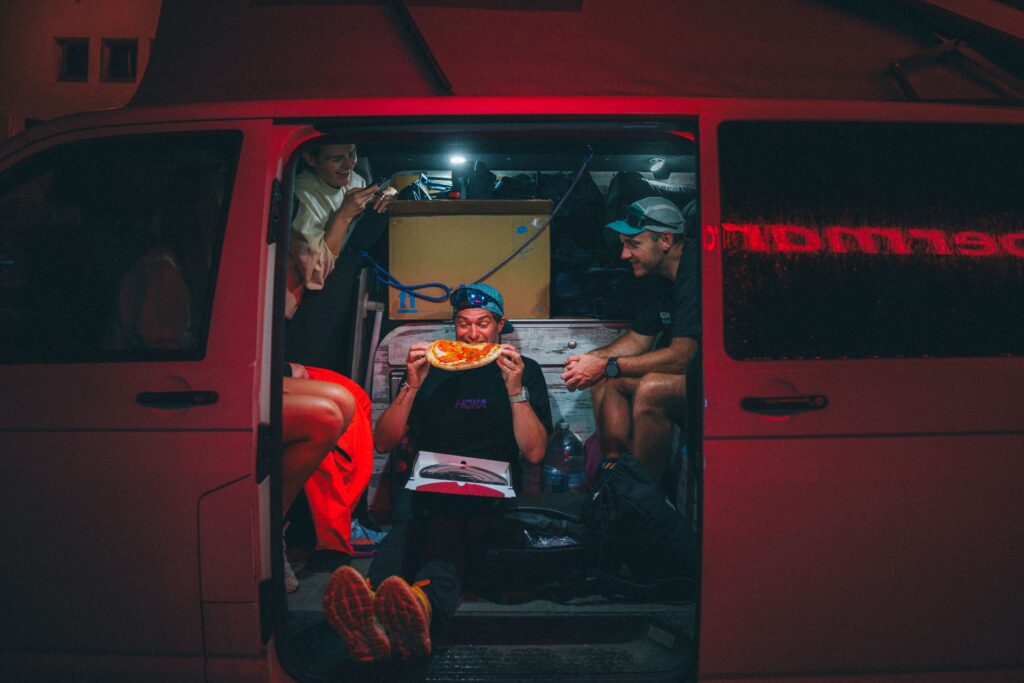
“Getting in here at quarter past five is a massive boost,” Hannah says. The plan is clearer this time: real food, electrolytes, fresh mindset, and a quicker turnaround before nightfall.
The late-night climb
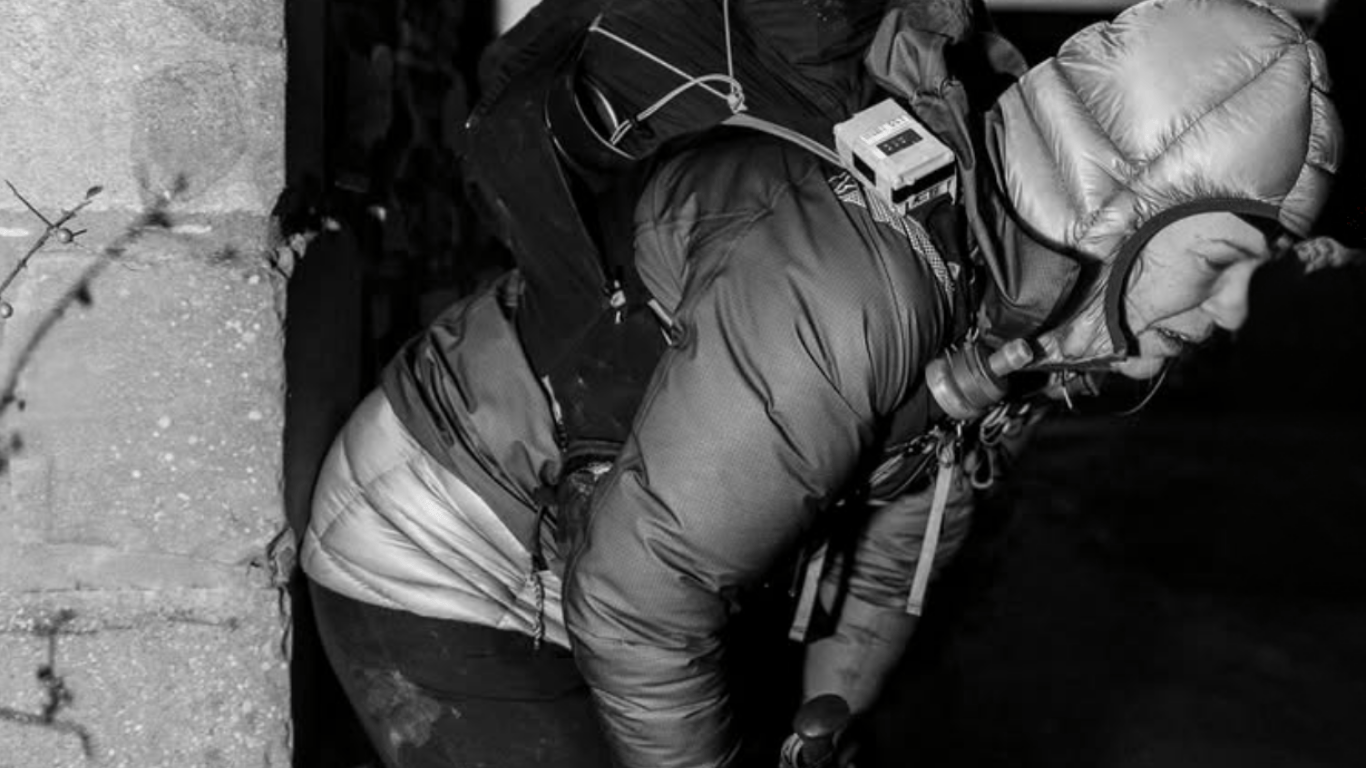
As darkness folds over the Alps, Darren checks in again: tired, sore, but determined.
“My legs hurt,” he admits. “There’s chafing in places I don’t want to tell you about… but I’m going to get it done.”
He tells Hannah he’s using his arms to lift his legs on the climbs. She listens, nods, recalibrates. There’s nothing dramatic here and no fiery motivation speeches, no theatrics. Just a shared understanding: keep moving, one way or another.
The emotional weight of waiting
For Hannah, the hardest part isn’t the gear or the schedules, it’s the long gaps between sightings. She spends those hours staring at a dot on a map that represents the person she cares about moving alone through cold, technical trails.
“It’s really difficult… knowing that’s your partner, running through the night… there are sleepless nights and worry,” she says. “Ultra running can be dangerous.”
Crewing demands trust in the runner, in the race, and in the mountains themselves.
It is a discipline of letting go.
Trail culture
There’s something quintessentially trail-running about the devotion that crewing inspires.
It’s not transactional.
It’s not performative.
It’s not about being seen.
It’s about people showing up for each other because someone once showed up for them, whether it was on a Tuesday night city run, on a first 50k attempt, or in a moment of self-doubt when they needed a gentle push.
One crewer captures it perfectly:
“It’s really lovely to be able to give back to someone who’s helped me on my running journey… it feels like the least I can do.”
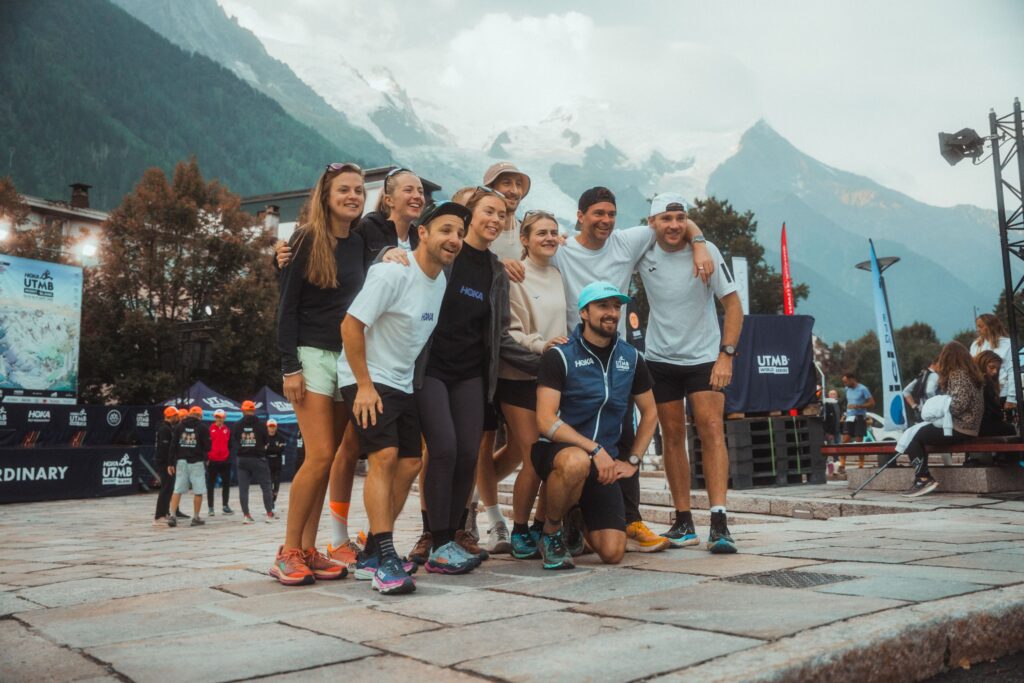
In a world that can feel increasingly individualistic, trail and ultra remind us that endurance is often communal. We get further, both literally and metaphorically, when someone is waiting for us at the next aid station.
The finish line belongs to all of them
When Darren imagines the finish line in Chamonix, it’s not the arch that comes first. It’s the people underneath it.
“I’m actually imagining my crew there, lining the sides,” he says. “That, for me, is the real moment of achievement and completion.”
For the crew, it’s overwhelming.
“Seeing him cross the finish line… there is just nothing like it,” Hannah says. “Joy, gratitude, community. Everything he’s given us — we get to give a tiny part of it back.”
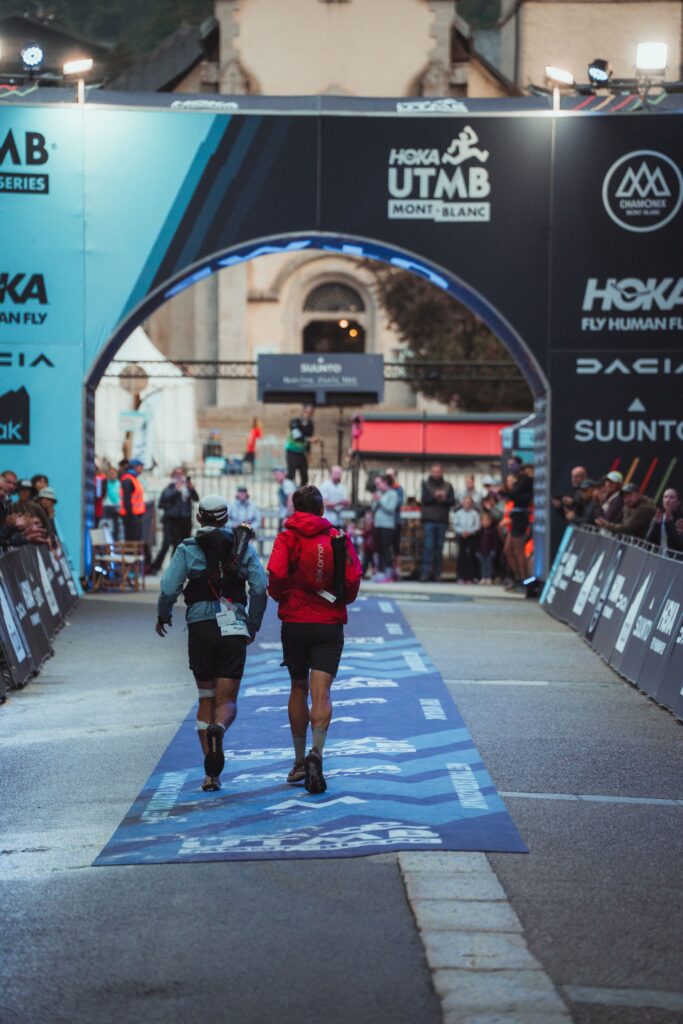
After more than 30 hours across mountains, through villages, into night and back into daylight, Darren crosses the line. His friends are there. His crew is there. His community is there.
The hidden athletes of every ultra
The Hidden Race doesn’t just show what it takes to run 148km through the Alps. It reveals what it takes to stand beside someone doing it.
The unseen miles.
The late-night calculations.
The collective heartache and collective joy.
Behind every runner is a quiet brigade of people doing their own endurance event defined by patience, worry, laughter, resilience, and a willingness to carry someone else’s hopes on their own shoulders.
They may not wear bibs.
They may never step onto a podium.
But they are, unquestionably, athletes in their own right.
The hidden athletes behind the line — running a race of their own, so someone else can finish theirs.
Details:
Produced in partnership with sportsshoes.com and Hoka.com
Photography by Nathan Phua and David Miller
Written by Daniel Neilson
Ultra runner: Darren Agnew
Chief Crewer: Hannah Cawthra
Film: The Hidden Race, available to watch free on Youtube (below)